
 By kids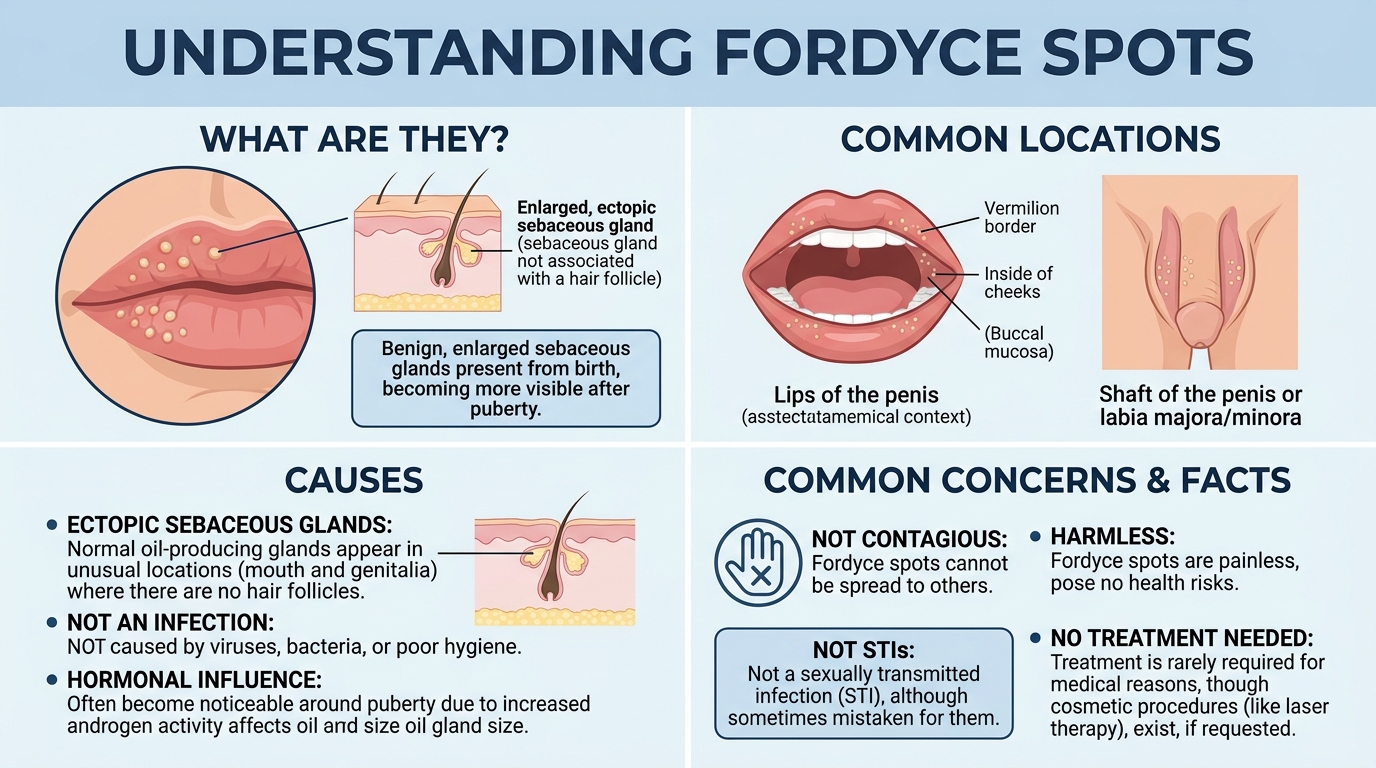
What Are Fordyce Spots?
Fordyce spots are visible sebaceous glands that appear on areas of the body where hair follicles are absent or less prominent. Sebaceous glands are responsible for producing oil that helps keep the skin moisturized and protected. In most people, these glands remain hidden beneath the skin surface. However, in some individuals, they become more noticeable and appear as small white, yellow, or pale bumps. Fordyce spots are not considered a disease, infection, or abnormal growth. Instead, they are recognized as a natural anatomical feature that occurs in a significant portion of the population.
Where Fordyce Spots Commonly Appear
The location of Fordyce spots often contributes to the concern they generate. They are most frequently found along the border of the lips, inside the mouth, and on the genital region. Because these areas are sensitive and highly visible, individuals may assume the spots indicate an infection or underlying health issue. In reality, Fordyce spots can develop in various locations where sebaceous glands exist. Their distribution differs from person to person, and some individuals may have only a few visible spots while others notice larger clusters that become more apparent under certain lighting conditions.
What Causes Fordyce Spots to Develop
Fordyce spots are generally present from birth, although they often become more noticeable during adolescence and adulthood. Hormonal changes associated with puberty can increase oil gland activity, making the spots easier to see. Genetics may also influence how visible these sebaceous glands become. Unlike many skin conditions, Fordyce spots are not caused by poor hygiene, infections, allergies, or lifestyle choices. They develop naturally as part of the body’s normal anatomy. Understanding their origin can help individuals avoid unnecessary worry and recognize that these spots are usually a harmless feature of healthy skin.
How Fordyce Spots Differ from Other Skin Conditions
One reason Fordyce spots create confusion is their similarity to other skin changes. Small bumps in sensitive areas are often mistaken for acne, cysts, allergic reactions, or sexually transmitted infections. However, Fordyce spots have distinctive characteristics that set them apart. They are usually painless, do not cause itching, and remain relatively stable over time. Unlike infectious conditions, they do not spread through contact or indicate illness. Recognizing these differences is important because misidentification can lead to unnecessary anxiety and incorrect assumptions about personal health or hygiene practices.
Are Fordyce Spots Harmful?
Fordyce spots are widely regarded as harmless and typically do not require medical treatment. They do not increase the risk of disease, affect physical health, or interfere with normal bodily functions. Most individuals experience no discomfort and may only become aware of the spots during routine grooming or self-examination. Although they are medically benign, some people feel self-conscious about their appearance, especially when the spots are visible on the lips or other exposed areas. In such cases, understanding their harmless nature can provide reassurance and help reduce concerns related to appearance.
Why Some People Seek Treatment
Even though Fordyce spots are not dangerous, some individuals explore treatment options for cosmetic reasons. Concerns about appearance may lead people to consult dermatology professionals regarding methods to reduce their visibility. Various procedures have been developed to address cosmetic preferences, although outcomes and suitability vary among individuals. Since Fordyce spots are a natural feature rather than a disease, treatment is usually considered optional rather than medically necessary. People interested in cosmetic improvement should seek professional guidance to understand available options and determine whether any intervention aligns with their personal goals.
The Importance of Proper Diagnosis
Accurate identification of Fordyce spots is important because many skin conditions share similar visual characteristics. Self-diagnosis based solely on internet images or assumptions may create unnecessary worry. A qualified healthcare professional can evaluate the appearance of the spots and distinguish them from other dermatological concerns. This professional assessment helps ensure that any unusual symptoms are properly investigated while confirming whether the bumps are simply Fordyce spots. Early clarification often provides peace of mind and prevents individuals from pursuing unnecessary treatments or experiencing prolonged uncertainty about their skin health.
Living Comfortably with Fordyce Spots
For most people, Fordyce spots become easier to accept once they understand their nature and prevalence. Since these spots are a common and harmless skin variation, many individuals choose not to pursue any treatment. Focusing on overall skin health, maintaining realistic expectations about appearance, and recognizing natural differences between individuals can support a positive perspective. Education plays an important role in reducing stigma and misunderstanding surrounding visible skin features. By becoming informed about Fordyce spots, individuals can feel more confident and less concerned about a condition that is generally considered completely normal.
Conclusion
Fordyce spots are a common, harmless skin feature that often causes concern simply because they are not widely understood. Appearing as small pale bumps on areas such as the lips, mouth, or genital region, they are visible sebaceous glands that occur naturally in many people. They are not contagious, painful, or associated with serious health problems. Understanding their causes, appearance, and differences from other skin conditions can help reduce anxiety and encourage informed decisions. With proper knowledge and professional guidance when needed, individuals can confidently recognize Fordyce spots as a normal part of human anatomy.