
 By kids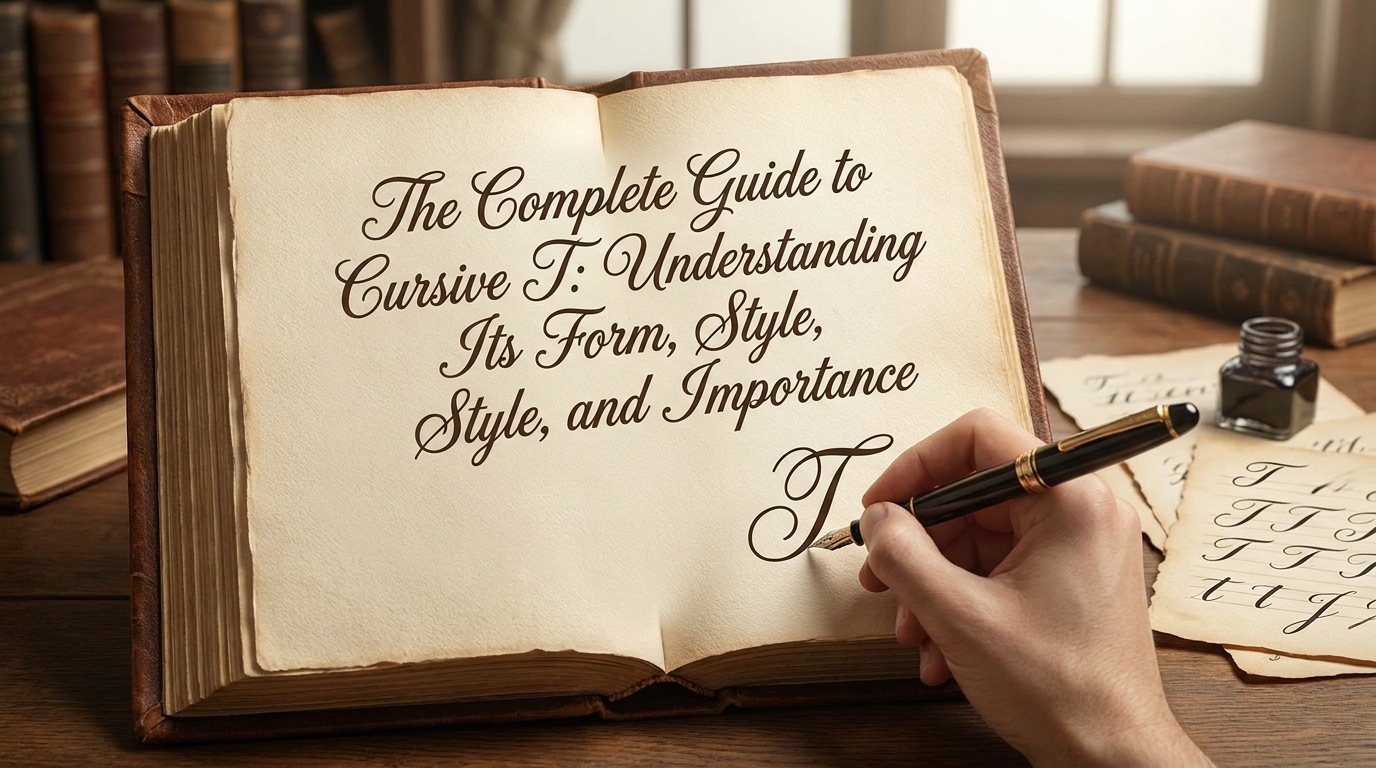
Cursive writing remains an important skill that combines creativity, communication, and personal expression. Among all cursive letters, the cursive t holds a unique place because of its elegant shape and distinctive cross stroke. Whether someone is learning handwriting for the first time or improving penmanship skills, understanding how to write and use the cursive t can significantly enhance overall writing quality. This letter often presents challenges for beginners due to its structure, but with proper practice and attention to detail, it becomes one of the most graceful characters in cursive handwriting. Exploring its features helps writers develop confidence and consistency.
What Is a Cursive T?
The cursive t is the cursive version of the letter “t” written in a flowing and connected style. Unlike its printed counterpart, it is designed to link smoothly with neighboring letters, creating continuous handwriting. The letter typically begins with an upward stroke, followed by a loop or vertical line and a crossbar placed near the top. Depending on the handwriting style being used, the appearance of the cursive t may vary slightly. However, its main purpose remains the same: maintaining fluid movement throughout a word. Understanding its basic structure is essential for anyone learning cursive writing effectively and accurately.
The History of Cursive Writing and the Letter T
Cursive handwriting has evolved over centuries as a practical method for faster writing. The development of the cursive t followed broader changes in script styles used across different regions and educational systems. Historical handwriting methods emphasized smooth pen movements that reduced the need to lift the writing instrument frequently. As cursive styles matured, the letter t adopted a recognizable form that balanced readability with elegance. Today, many traditional handwriting systems still teach similar versions of the cursive t. Learning about its historical background helps writers appreciate the artistic and functional role this letter continues to play.
Key Characteristics of a Well-Written Cursive T
A properly formed cursive t demonstrates balance, clarity, and smooth movement. One of its most recognizable features is the cross stroke, which distinguishes it from other cursive letters. The vertical portion should be straight and proportional to surrounding letters, while the connecting strokes should remain fluid and controlled. Consistency in size and spacing also contributes to an attractive appearance. Writers often focus on maintaining even pressure and rhythm when creating the cursive t. These characteristics not only improve visual appeal but also enhance overall readability, making handwritten text easier for others to understand and appreciate.
Common Challenges When Learning Cursive T
Many learners find the cursive t more difficult than other lowercase letters because it involves multiple coordinated movements. One common challenge is placing the crossbar at the correct height and length. Another issue involves maintaining proper spacing when connecting the letter to neighboring characters. Beginners may also struggle with creating smooth transitions between strokes, leading to uneven or inconsistent shapes. Regular practice helps address these difficulties by building muscle memory and control. Understanding these common obstacles allows learners to focus on specific areas that need improvement, resulting in better handwriting and greater confidence over time.
Techniques for Practicing the Cursive T
Developing proficiency with the cursive t requires structured and consistent practice. Writers often begin by tracing examples before progressing to independent writing exercises. Repeating individual letters helps establish correct movement patterns and strengthens hand coordination. Once comfortable with the basic form, learners can practice common words containing the letter t to improve letter connections. Maintaining a relaxed grip and steady writing speed also contributes to better results. Focusing on quality rather than speed allows the hand to develop accurate habits. Over time, these techniques help create a natural and polished cursive t that integrates seamlessly into everyday handwriting.
Differences Between Uppercase and Lowercase Cursive T
The uppercase and lowercase forms of the cursive t differ significantly in appearance and complexity. The lowercase version is generally compact and designed for efficient connections within words. In contrast, the uppercase form often includes larger loops and decorative elements that create a more formal appearance. These stylistic differences serve both practical and visual purposes in writing. Writers must learn each form separately to ensure consistency and accuracy. Understanding how uppercase and lowercase letters function within a script helps improve overall handwriting quality and allows for smoother transitions when composing complete sentences and documents.
The Role of Cursive T in Handwriting Development
Learning the cursive t contributes to broader handwriting development by strengthening coordination, precision, and rhythm. Because the letter includes both vertical and horizontal elements, it encourages learners to practice multiple movement patterns. These skills transfer to other letters and improve overall writing fluency. Educational programs often include focused exercises on letters like the because they help reinforce important handwriting fundamentals. Consistent practice develops stronger motor control and greater confidence. As handwriting improves, writers can express ideas more efficiently while maintaining an attractive and professional appearance throughout their written communication.
Modern Uses of the Cursive T
Although digital communication dominates many aspects of daily life, handwriting continues to have value in personal, educational, and professional settings. The t remains an important part of signatures, handwritten notes, creative projects, and historical document interpretation. Many individuals appreciate writing for its elegance and personal touch, qualities often absent in typed text. Learning the t helps preserve traditional handwriting skills while supporting cognitive and motor development. Its continued use demonstrates that remains relevant despite technological advancements. As a result, understanding this letter still benefits people of all ages and backgrounds.
Tips for Perfecting Your Cursive T Style
Refining the t involves patience, observation, and regular practice. Writers can improve by studying high-quality handwriting examples and identifying details that contribute to consistency. Paying attention to letter height, crossbar placement, and spacing between characters helps create a more polished appearance. Experimenting with different styles can also help individuals discover a version that feels comfortable and natural. Practicing slowly before increasing speed ensures greater accuracy and control. Over time, small adjustments lead to noticeable improvements. These efforts allow writers to develop a distinctive handwriting style while maintaining the essential features of the cursive t.
Conclusion
The an essential component of handwriting that combines functionality with visual elegance. Its distinctive shape, historical significance, and role in writing development make it an important letter for learners and experienced writers alike. By understanding its structure, practicing proper techniques, and addressing common challenges, anyone can improve their ability to write the effectively. As part of a broader handwriting system, this letter contributes to smoother communication, stronger motor skills, and a more refined personal writing style. Mastering the t ultimately enhances both the beauty and readability of handwritten text.